
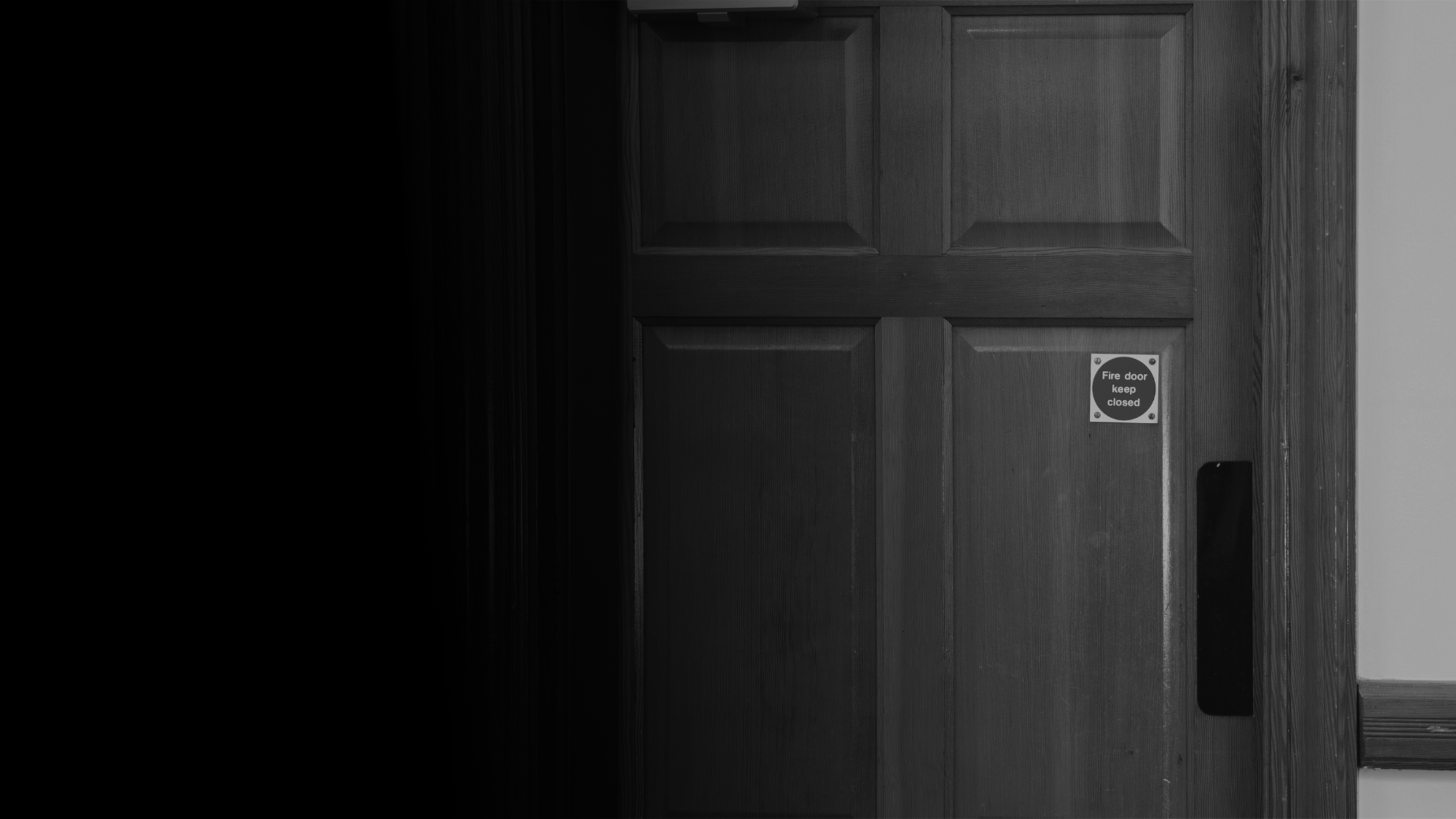
Fire Door Inspection
Learn how to inspect certified, notional and nominal fire doors and record what you find.
Learning Style
Time Limit
Duration
Outcome
Total excl. VAT
425
1 licence
Buying for a team? Volume discounts apply automatically.
Cost per licence: 425
Course aims
Explain the principles of fire development and the role of fire doors in preventing the spread of fire and smoke within buildings
Interpret key fire safety legislation, guidance and standards relevant to the selection, use and maintenance of fire doors
Carry out effective fire door inspections, identifying non-compliances and recording findings in line with regulatory and organisational requirements
Demonstrate the competence, communication and practical judgement needed to manage fire doors in occupied buildings and support ongoing compliance
Who it’s for
This course is for individuals who have responsibility for the safety, compliance and maintenance of fire doors within buildings, or a significant part of their role involves inspecting or checking fire doors.
Building managers
Facilities managers
Health and safety professionals
Fire safety professionals
Maintenance teams and contractors
Fire safety inspectors
This course does not have any prerequisites.
Where it can take you
The NSA Fire Door Inspection course gives you the knowledge to inspect fire doors and report on their condition.
What can I do?
Successful learners will be able to confidently take on fire door inspections in-house or for clients.
Recognised by the Institution of Fire Engineers
This course is officially recognised by the Institution of Fire Engineers (IFE) as a Recognised Training Course (RTC). Each RTC is assessed by the IFE for the quality of its content and delivery, and learners receive formally validated CPD hours on completion.
Will I receive a certificate?
Yes — all successful learners receive a digital certificate on passing, confirming 20 hours of CPD in fire door inspection. Hard copy certificates are available on request for a fee.
Keep developing
You may also be interested in our Fire Stopping Inspection course if you are responsible for passive fire protection in buildings.
Your learning journey
Welcome
A welcome to the course, academic malpractice policies, and the fire safety landscape in England and Wales.
Block 1 | What is fire?
How fires start, develop and spread — the fire tetrahedron, ignition sources and the stages of fire growth.
Block 2 | What is a fire door?
The role of fire doors in protecting life and property: compartmentation, containing fire and smoke, and why correct installation and maintenance matter.
Block 3 | Legislation and guidance
Fire safety law, the duties of the Responsible Person and key legislation such as the Regulatory Reform (Fire Safety) Order and Building Safety Act 2022.
Block 4 | Who can inspect a fire door?
The types of inspection from basic observations to detailed surveys, and what competency means with reference to SKEB — skills, knowledge, experience and behaviours.
Block 5 | Fire door certification and standards
How fire doors are tested, certified and marked to demonstrate performance, how to interpret certification labels, and the importance of documentation.
Block 6 | Components of a fire door
Each element of a fire door set — leaves, frames, seals, hinges and glazing — and how they work together to maintain integrity and performance.
7 learning blocks
Assessment 1 | Knowledge test
A 60-minute, 30-question test of technical and applied practical knowledge.
Block 7 | Carrying out fire door inspections
Plan and conduct thorough inspections: a structured process, identifying common faults and how they might be addressed.
Block 8 | Record-keeping and reports
Clear, consistent documentation: producing inspection records and using the NSA Fire Door Inspection Report.
Block 9 | Putting it into practice
Apply your learning: setting inspection frequencies, managing fire doors in occupied buildings and communicating with occupants, reinforced by case studies.
3 learning blocks
Assessment 2 | Skills test
Record yourself describing a door set, the issues identified and your inspection approach.
Assessment 3 | Fire door inspection
A virtual inspection of two fire doors, producing a suitable inspection report for each.
ID Verification
A quick identity check before your certificate is issued.
ID Verification
Certificate
Your digital certificate on successful completion.
Fees and Payment
Payment options to suit you.
Pay in full
VAT receipt issued by email immediately. Invoice with 30-day terms available for five licences or more.
Pay with Klarna

Klarna is a form of credit. Credit subject to status, UK residents aged 18+ only. Borrowing more than you can afford or paying late may negatively impact your financial status and ability to obtain credit. Ts&Cs and late fees apply.
Pay with Affirm
Affirm is a form of credit. Credit subject to credit check. Terms apply. UK residents only, 18 and over with a bank account or a debit card. A down payment may be required. Missed payments could affect your financial status. National Safety Academy Limited is an Introducer Appointed Representative of Affirm U.K. Limited, authorised and regulated by the FCA (FRN 1043144).
Additional charges may be incurred for resubmissions, late submissions, or course extension. See our policies for further detail.
How it's delivered and assessed
Learn from first principles
You’ll learn from first principles, so expect to come away able to explain the why and how — as well as the what. Your learning is supported with real-life examples, case studies, videos and e-learnings, in everyday language that makes sense first time.
You can navigate through the course content in your learning portal online.
There are three assessments. The first is completed mid-way through the course and the final two once all the learning materials have been covered. There are also multiple opportunities for informal self-assessment throughout.
Knowledge test
60 minutes to answer 30 questions covering both technical and applied practical knowledge.
Skills test
Record yourself describing a door set and any issues identified, and discuss your approach to the inspection.
Fire door inspection
A virtual inspection of two fire doors in two different buildings. Photographic evidence and measurements are provided; produce a suitable inspection report for each door.
Buying for a team?
Discount applies automatically
Choose the number of licences on any course page. Licences stay unassigned until you allocate them and remain valid for 12 months.
Frequently Asked Questions
Do I need previous experience to complete your courses?
There are no prerequisites for this course. However, some experience of fire safety within the workplace will help you to put what you have learnt into context.
What certificate will I receive?
Successful learners receive a digital certificate on passing. Hard copy certificates are available on request for a fee. Each course page shows the CPD hours you’ll receive.
Can I study online at my own pace?
Yes. Our online courses are self-directed distance learning, studied in our learning portal whenever suits you. Each course has a time limit, from 3 months for our shortest courses to 12 months for the Diploma.
Can I get a hard copy certificate?
Yes. Hard copy certificates are available on request for a fee.
What payment options are there? Can I pay in instalments?
Yes. You can pay in full, spread the cost with one of our payment plans, or use a third-party provider. Every option costs the same, and you choose at checkout.
What happens if I don’t pass an online assessment?
Don’t worry! If you don’t pass an assessment on your first attempt, you’ll usually receive feedback to help you understand where you went wrong – dependent on the nature of the assessment. Once you’ve paid the resubmission fee and revisited any relevant areas, you’ll be able to resubmit your work, although the number of attempts permitted may vary by course.
What’s the difference between Fire Door Awareness and Fire Door Inspection?
Fire Door Awareness (4–6 hours) teaches you to carry out routine fire door checks and spot problems, including checks under Regulation 10. Fire Door Inspection (around 20 hours) is for people whose role involves inspecting fire doors in depth: you learn to inspect certified, notional and nominal fire doors, identify non-compliances and record your findings. Fire Door Inspection is also recognised by the IFE.
Do I need previous experience to take the Fire Door Inspection course?
No. There are no prerequisites. The course is for anyone responsible for fire doors, or whose role involves inspecting or checking them, such as building and facilities managers, maintenance teams and fire safety professionals.
Can I carry out Regulation 10 fire door checks after Fire Door Inspection?
Yes. Fire Door Inspection goes further than routine checks. You learn to inspect certified, notional and nominal fire doors, identify non-compliances and record your findings in line with regulatory requirements.
Is Fire Door Inspection a fire door inspector qualification?
Fire Door Inspection is recognised by the Institution of Fire Engineers (IFE) as a Recognised Training Course. Once you pass, you’ll be able to take on fire door inspections in-house or for clients, and you’ll receive a certificate confirming 20 hours of CPD.
What’s the difference between certified, notional and nominal fire doors?
Certified fire doors are supported by third-party certification, providing independent assurance that they meet specified performance standards. Notional fire doors are older doors that are considered likely to provide a degree of fire resistance, despite lacking modern test evidence. Nominal fire doors are doors judged to offer a degree of fire resistance based on their construction, but without supporting test or certification evidence.
Who is allowed to inspect fire doors?
Anyone competent can inspect fire doors. In England and Wales there’s no licence or mandatory qualification, but the responsible person for a building should make sure whoever they use has the right training, knowledge and experience. Trained in-house staff can carry out routine checks, while detailed inspections should be done by someone trained to inspect fire doors.
Do fire door inspectors need a qualification?
Not by law, but recognised training is a straightforward way to show clients and employers you’re competent. Our Fire Door Inspection course is recognised by the Institution of Fire Engineers (IFE) as a Recognised Training Course. It teaches you to inspect certified, notional and nominal fire doors and record what you find in an inspection report.
What’s the difference between a fire door check and a fire door inspection?
A fire door check is a routine look at a door’s condition, such as whether it closes fully and its seals and hinges are intact, and is usually done by trained in-house staff. A fire door inspection is a more detailed assessment, recorded in a report. Our Fire Door Awareness course covers checks, and our Fire Door Inspection course covers inspections.
How often should fire doors be checked?
In residential buildings in England over 11 metres high with two or more flats, the Fire Safety (England) Regulations 2022 require communal fire doors to be checked at least every three months, and flat entrance doors at least every 12 months on a best endeavours basis. In other premises, your fire risk assessment should set how often fire doors are checked.
Can fire door inspection training be done online?
Yes. Our Fire Door Inspection course is self-directed online learning, taking approximately 20 hours, with up to six months to complete it. You study at your own pace around work and finish with an assessed fire door inspection report.
What is passive fire protection?
Passive fire protection is the parts of a building built to contain fire and smoke without needing to be switched on, such as fire doors, fire-resisting walls and floors, and fire stopping around services. It divides a building into compartments, giving people time to escape and limiting damage. Active systems, such as alarms and sprinklers, respond once a fire starts.
What is compartmentation?
Compartmentation divides a building into separate fire-resisting sections, using walls, floors, fire doors and fire stopping, so a fire is contained in the area where it starts. It slows the spread of fire and smoke, protects escape routes and supports evacuation strategies such as stay put in some residential buildings.
Are NSA’s courses accredited or recognised?
Several of our courses carry external recognition. Our Diploma in Fire Risk Assessment is an SCQF Level 10 qualification developed in line with BS 8674:2025, and our Fire Door Inspection course is recognised by the Institution of Fire Engineers (IFE) as a Recognised Training Course. Each course page sets out the recognition and CPD hours that apply.